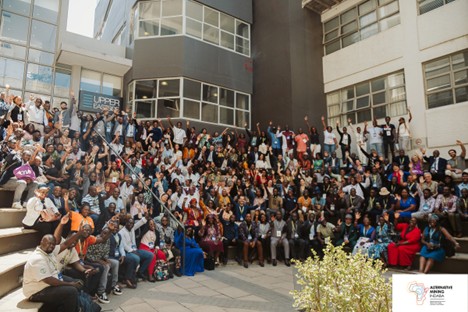
As Africa navigates the complexities of a global energy transition, the Alternative Mining Indaba (AMI) 2026 emerges as a pivotal platform for redefining resource governance. This year’s theme, “Power to the People; Owning Africa’s Energy Future”, resonates deeply with the continent’s ongoing struggles against extractive injustices.
The Centre for Environment Justice (CEJ) is dedicated to promoting environmental rights, sustainable mining practices, and community-led advocacy. CEJ’s participation and involvement aligns seamlessly with AMI’s focus on community-driven solutions to Africa’s energy poverty, where over 600 million people in Sub-Saharan Africa lack electricity access (International Energy Agency, 2024; World Bank, 2024), even as the continent supplies critical minerals like lithium from Zimbabwe, cobalt from the Democratic Republic of Congo (DRC), and graphite from Mozambique to fuel the Global North’s green ambitions (US Geological Survey, 2024).
By linking AMI’s theme to pressing issues such as opaque mining contracts, land dispossession, and “green colonialism,” CEJ aims to amplify grassroots voices and advocate for policies that prioritize people over profits. This participation builds on CEJ’s ongoing work, including the Business Investments Response and Influence on Climate Change and Environment in Zambia (https://cejzambia.org/wp-content/uploads/2025/12/Business-Investments-Response-and-Influence-on-Climate-Change-and-Environment-in-Zambia.pdf?referrer=grok.com), which examines how investments in mining and energy sectors exacerbate environmental degradation while offering pathways for reform.
By linking AMI’s focus on democratic resource governance with CEJ’s work in areas like community empowerment and policy reform, this article explores how owning Africa’s energy future can address systemic inequities in mining and energy sectors.
Rationale
Africa’s energy future is at a crossroads, marked by a “green minerals boom” that promises economic growth but often perpetuates colonial-era exploitation. Countries like Zambia, the Democratic Republic of Congo (DRC), Mozambique, and Zimbabwe are ramping up extraction of critical minerals essential for electric vehicles, batteries, and renewable technologies. Yet, this surge risks replaying historical injustices: centralized power structures, elite capture, and community displacement.
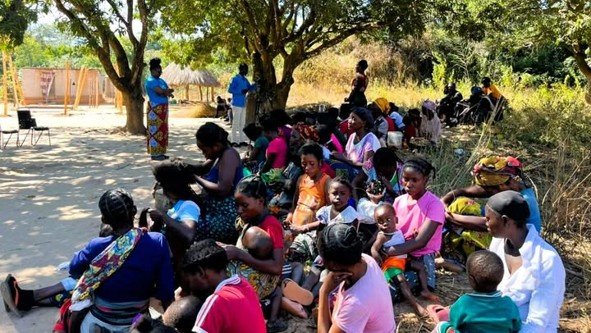
In Zambia’s Copperbelt, for instance, foreign-owned mining operations have led to repeated forced removals without adequate consent (Amnesty International, 2023; Human Rights Watch, 2023), echoing patterns of resource grabs under neoliberal regimes (Borras and Franco, 2013). Communities in some SSA countries, such as the DRC and Zambia, environmental degradation and health crises from toxic pollutants caused by the lack of access to clean energy (WHO, 2023; The Lancet Planetary Health, 2022). This underscores the disconnect between global demands and local benefits. The theme “Power to the People” directly addresses these challenges by calling for ownership that centers communities as stewards, not victims, of their resources.
CEJ’s work has long advocated for transparent governance in extractive industries to combat environmental injustice. In Zambia, where mining contributes significantly to GDP but often at the cost of ecosystems and livelihoods, CEJ’s research reveals gaps in policy implementation that fail to support sustainable development. For example, the policy analysis in Does Zambia’s Artisanal and Small Scale Mining Policy Approach Support Sustainable Development highlights how current frameworks marginalize small-scale miners https://cejzambia.org/wp-content/uploads/2025/06/Does-Zambias-Artisanal-and-Small-Scale-Mining-Policy-Approach-Support-Sustainable-Development.pdf?referrer=grok.com, leading to unsafe practices and limited economic inclusion. CEJ seeks to bridge these local realities with continental advocacy, emphasizing that true energy ownership must dismantle patriarchal and capitalist logics that exclude women, youth, and indigenous groups from decision-making.
What Can be Done?
To realize “Power to the People,” concerted actions are required at multiple levels, building on AMI’s legacy and CEJ’s grassroots expertise. First, governments and corporations must prioritize transparency in mining contracts and licensing, addressing opacities reported in countries like Mozambique and Tanzania, where discrepancies in documentation undermine community agency. This includes enforcing Free, Prior, and Informed Consent (FPIC) principles to prevent violent displacements, as evidenced in South Africa’s Stilfontein tragedy and Zambia’s ongoing land conflicts in Minambe ward of Mokambo in Mufulira district.
Second, policy reforms should promote beneficiation (processing minerals locally to retain value), rather than raw exports that benefit global value chains disproportionately. AMI 2026’s calls for community-centered governance echoes this, advocating for models that integrate environmental stewardship with economic sovereignty.
Third, combat “green colonialism” by promoting beneficiation and alternative models of ownership, like community-led cooperatives or regional value chains. This involves challenging global agreements, such as the Tesla-Syrah deal in Mozambique (Reuters, 2022), to ensure benefits return to the continent.
Expectations
AMI 2026 is poised to generate actionable outcomes, including policy proposals from plenaries and tribunals that expose corporate impunity and advance just transitions. With over 600 participants (from mining-affected communities to civil society) the Indaba expects to strengthen national chapters, enhance advocacy on global platforms like the African Mining Vision (AMV), and produce campaigns for gender-just, environmentally sustainable models.
CEJ anticipates contributing through exhibitions, panels presentations on extractive accountability and sustainable energy, drawing from their expertise to influence reforms in Zambia and beyond. Overall, the event is expected to foster radical imagination, leading to commitments for localized energy ownership and reduced “green” exploitation.
Conclusion
As Africa navigates the energy transition, AMI 2026’s theme “Power to the People: Owning Africa’s Energy Future” serves as a beacon for reclaiming sovereignty from extractive legacies. CEJ’s participation underscores the vital role of civil society in linking local struggles (such as Zambia’s mining-induced environmental crises) to continental movements for justice. By addressing energy poverty, land dispossession, and opaque governance through collaborative action, we can forge a future where communities truly own their resources.
By Jennifer Mwanangombe – Programmes Coordinator: Environment & Extractives